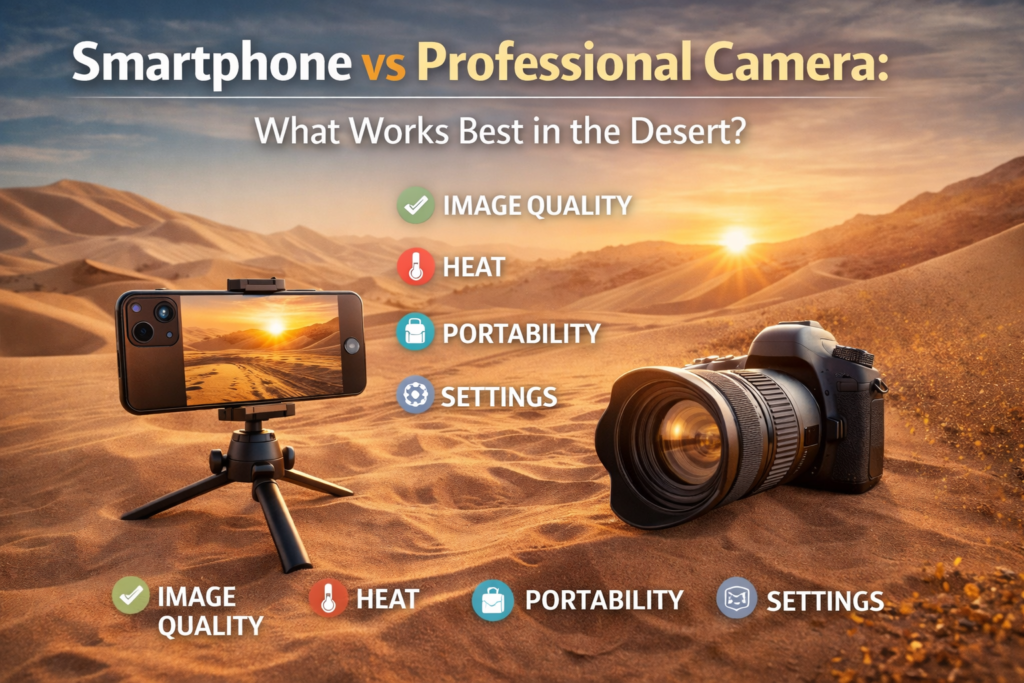
One should consider various factors to determine which photographic equipment produces the best results in the desert. The bright light and continuous sand movement create obstacles for all types of cameras. Desert photography requires both smartphone and professional camera systems because they deliver different benefits and disadvantages. Professional equipment maintains its value because it performs better than typical equipment in specific desert conditions. Your equipment choice should match your photography requirements and your planned desert activities.
Smartphone Camera Advantages
Smartphones bring several compelling benefits for desert photography. The photography in phones automatically handles challenging lighting scenarios. Users can share their desert photos on social media right after taking them. The small size and weight mean you don’t have to carry extra equipment in the heat. Phone cameras work perfectly for casual tourists who want good vacation photos. You save significant money by using equipment you already own.
Professional Camera Benefits
Professional cameras still provide advantages that smartphones cannot match in desert environments. The system delivers enhanced operational capability to handle extremely bright lighting conditions and extremely dark shadow areas. The system features fast autofocus systems that can track moving subjects during both wildlife viewing and dune bashing. Professional equipment produces images suitable for large prints or commercial use.
Handling Desert Light
Desert lighting creates unique challenges. The bright reflective sand can fool automatic exposure systems in both devices. Smartphones handle this through HDR modes. Professional cameras require manual exposure compensation or bracketing techniques. Both phone and professional cameras work best during golden hours at sunrise and sunset. Professional cameras with optical viewfinders avoid this screen visibility problem. Understanding how each device handles bright conditions helps you work around limitations.
Dust and Sand Protection
Protecting cameras from sand becomes crucial in desert environments. Sand gets everywhere and can damage sensitive camera equipment. Phone cameras stay protected when kept in pockets between shots. Both types of cameras benefit from protective filters or cases in dusty conditions. The ease of smartphone protection gives them practical advantages for casual desert visitors.
Zoom and Composition
Zoom capabilities differ between smartphones and professional cameras. Both phones and professional cameras with wide lenses handle landscapes well. Wildlife photography or distant dune details require telephoto lenses. For most tourist photography needs, phone zoom capabilities prove adequate. Serious photographers wanting flexibility and quality need professional camera systems.
Ease of Use
Ease of use strongly favors smartphones for most casual desert safari visitors. Phones require minimal technical knowledge, with automatic modes handling most situations. Professional cameras involve learning curves, focus, and settings. Smartphones instantly back up photos to cloud storage, preventing loss. Professional camera reviewing happens on small back screens or requires computer transfer.
Conclusion
Many photographers find that using both devices creates the best desert photography. The challenging desert lighting and environment affect both device types. Protecting equipment from sand and dust is necessary regardless of camera choice. Low-light and zoom capabilities favor professional equipment. For most casual tourists, modern smartphones deliver excellent desert photos. Serious photographers benefit from professional equipment.